
Adventurer, Passenger, or Skeptic: How Our Mindset Shapes Our Choices
February 2025
Hello, Community – First, a huge thank you to everyone who shared their Word(s) for the year! It was so much fun reading them and hearing what they mean to you. If you haven’t already, I invite you to keep your word(s) visible—whether that’s through post-it notes, your vision board, a note on your phone, or even (like me) asking ChatGPT to remind you of them throughout the year.
In today’s newsletter, I want to explore a simple but powerful framework that’s been helping me navigate growth, change, and even moments of hesitation.
Adventurer, Passenger, or Skeptic:
How Our Mindset Shapes Our Choices
One of the things I love about coaching and consulting is providing clients with tangible tools that bridge where they are with where they want to be. And honestly? I need those same kinds of tools myself. I like having something concrete to reflect on—something that helps me pause and check in internally before I act externally
One framework I learned through my training as a Graydin Start with Heart facilitator is a simple but insightful way of understanding how we engage with experiences. I’ve adapted it slightly and now think of it in three categories: Adventurer, Passenger, and Skeptic.
Originally, this was shared as a way to manage group dynamics, but I’ve found it to be just as impactful on an individual level—helping me understand my own mindset in different situations.
We all cycle through these roles at different times:
Adventurer – Leads with excitement, curiosity, and a willingness to explore and experiment.
Passenger – Goes along for the ride, open but not necessarily excited; more passive.
Skeptic – Leads with caution, hesitation, or resistance; more closed off.
At first glance, it might seem like we should always aim to be the Adventurer, but that’s not actually the case. Each of these mindsets serves a purpose—it’s about recognizing when we’re in them by choice versus when we’re defaulting to them unconsciously.
Let's break it down. Here’s how each mindset can be both helpful and limiting:
Adventurer
Advantage: Open to possibilities, excited about challenges, and willing to step into a leadership role.
Example: Volunteering for something new, taking initiative, diving headfirst into an experience.
Disadvantage: Can sometimes overdo things—taking control as a way to feel safe, or always filling space instead of making room for others.
Example: Always being the first to answer in meetings or workshops—not necessarily out of confidence, but because of a subconscious need to “hold” the space or manage discomfort.
Passenger
Advantage: A great observer, able to stay neutral, and open to experiences without pressure.
Example: Enjoying an event without feeling the need to plan it, just going with the flow.
Disadvantage: Can get stuck in the “good enough” mindset—participating just enough but not fully engaged or taking risks.
Example: Saying yes to an invitation but not really putting yourself in the experience.
Skeptic
Advantage: Helps us set boundaries, think critically, and avoid jumping into things blindly. Sometimes, skepticism points to underlying fears that we can explore.
Example: Taking time to ask questions before committing to something big.
Disadvantage: Can hold us back from growth, deeper connections, or new experiences.
Example: Turning down opportunities out of fear or hesitation, rather than genuine disinterest.
This framework has been a game-changer in helping me notice my own patterns. A perfect example? Joining my run club.
I knew I wanted more community and accountability with my running, so I started looking up local clubs. I found one that felt like a great fit, but instead of jumping in, I hovered in Passenger mode—watching their Instagram for two months before I actually showed up. Then, finally, my Adventurer had a moment of courage, and on Memorial Day weekend 2023, I showed up for my first Saturday run.
At first, I stuck to Saturdays. But then I started seeing that Wednesday runs were becoming the thing. They were bigger, more social—and way more intimidating. It took me six months to get up the nerve to go. And even when I did, my Skeptic kicked in hard. I found myself at the post-run bar, standing to the side, feeling unsure and out of place.
But here’s the thing—this is where the power of frameworks comes in. Instead of just letting the Skeptic mindset take over, I got curious about it. What was actually going on?
When I stepped outside of myself and observed without judgment, I realized my inner Skeptic was deeply tied to my inner Gremlin—the voice that tells me I’m not good enough, that I won’t fit in, that no one will like me.
Who else has a loud inner Gremlin? 🙋🏼♀️
I started pushing back against that voice. When I got invited to things outside the run club, my Skeptic wanted to shut it down. But I leaned on my Passenger mindset instead—telling myself, “Just go along for the ride.” The more I did this, the more confident I became. And over time? My Adventurer started to take the lead.
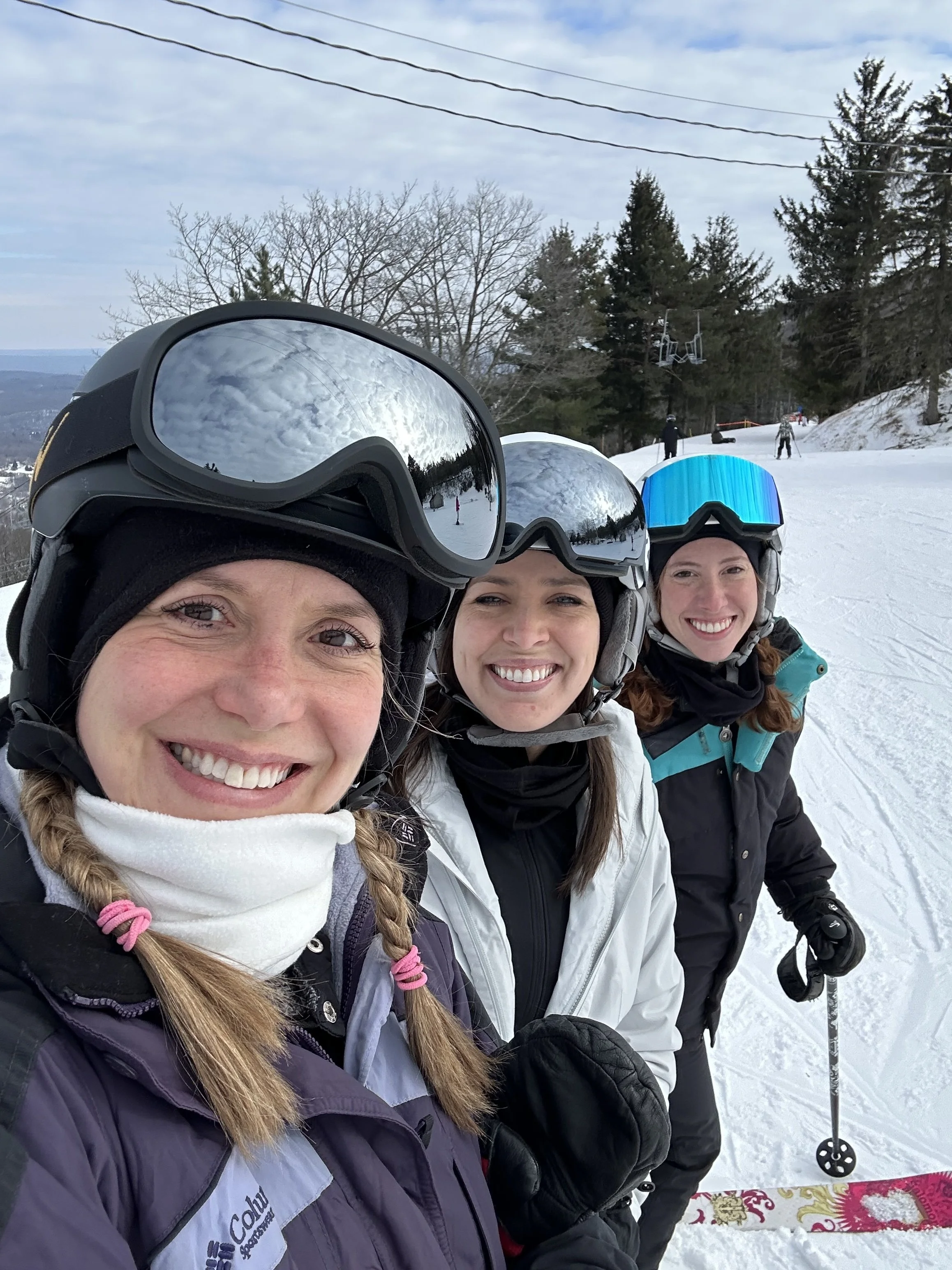
Fast forward to this winter—I got invited on a ski trip with people from my run club. I love skiing - it was a big part of my life growing up, but I hadn’t gone in seven years. My Adventurer said an immediate YES.
But as the weekend got closer? My Skeptic showed up loud and clear. I started worrying about spending an entire weekend with so many people. My Gremlin assumed everyone was going to be way better than me.
So I shifted strategies—I let my Passenger take over. I reminded myself I didn’t have to be the best skier, the most social person, or the life of the party. I just had to be there.
And you know what? It worked.
Throughout the weekend, I danced between all three mindsets—some moments, I was fully Adventurer, embracing the slopes and the experience. Other moments, I slipped into Skeptic, overthinking. And sometimes, I just let myself be a Passenger and enjoy the ride.
That’s what being human is. We all move through these roles, and the key is not getting stuck in one. Individually and collectively, we need all three to function.
Take a moment to reflect:
In what areas of your life do you naturally lean into Adventurer, Passenger, or Skeptic?
Where might shifting your mindset consciously help you move forward?
Can you think of a time when noticing these mindsets helped you navigate something new?
Hit reply and let me know—I’d love to hear from you!