
The Grief We Don’t Talk About: How Change, Growth, and Even Success Can Break Your Heart
June 2025
Hello, Community —In my last newsletter, I wrote about taking the leap—that terrifying, exhilarating moment before we jump into something new. And wow! The responses I received were heartfelt, brave, and deeply human. Thank you for sharing your stories!
Before that, we explored The Goo Stage—that messy, uncertain middle part of transformation where things fall apart before they come together. (If you missed it, it’s worth a read—especially if you’re in the in-between. And honestly, when aren’t we?)
Today, I want to talk about something we don’t always name during those moments of change: Grief.
Because here’s the thing:
When we’re courageous enough to take the leap…When we surrender to the goo…When we grow, evolve, shift…We don’t just move forward. We leave something behind.
Sometimes that’s a job or a relationship or a place. But oftentimes, we also leave behind parts of ourselves. Identities that once defined us; the roles we played; the versions of us that felt safe, familiar, maybe even successful.
And even when that growth is chosen, it doesn’t mean it’s not painful. It doesn’t mean we don’t grieve.
The Grief We Don’t Talk About:
How Change, Growth, and Even Success Can Break Your Heart
Over the last five years, there’s been a lot of change in my life. Some changes I chose. Some I never saw coming. And some—the hardest ones, perhaps—are the things that still haven’t happened. The dreams I’m learning to release. The timelines I’ve had to reimagine.
It wasn’t until about a year ago, during a therapy session, that my therapist gently said: “It sounds like you’re in a grieving process.”
That gave me pause. Like many people, I thought grief only applied when someone dies. But when I looked closer, I realized: So many parts of my life had… ended. Or shifted. Or faded. Or had been let go.
There were things that died—not physically, but energetically—roles, identities, routines, relationships, and expectations. That awareness hit me hard, though it also helped me soften and some of the heaviness I was clinging to was released.
I’ve grieved:
Career transitions: Letting go of full-time teaching. Stepping back from choreography and directing. Saying goodbye to the private school community where I had poured so much of my heart for so many years.
Friendships: Some naturally changed. Others ended without clarity or closure. Each one left a mark.
Love: A relationship that took me by surprise in the best ways. It was profound, healing, and full of joy—and also not meant to continue.
Future visions: The version of my life I thought I’d be living by now. The one I had planned in my 30s.
Creative risks that didn’t land: Dreams followed with such conviction only to be met with doors that didn’t open.
Even when you know something is right, it can still hurt to let it go. And—this is important—alongside all of that, the last five years have also held so much beauty.
I’ve built and grown a business I’m deeply proud of. I found strength and joy in my running community. Made new friends who feel like soul family. I have traveled, created, returned to writing, and worked with clients I used to dream about supporting.
It’s not one or the other. It’s a both/and.
Grief doesn’t mean life isn’t good. It means you’re someone who lets yourself feel—even when it’s uncomfortable. It means you’ve lived, loved, risked, stretched, and tried. It means you’re human.
Grief doesn’t just live in our personal lives—it’s deeply present in our professional lives too. I see it with clients every week:
Teams grieving lost colleagues or a workplace culture after a reorg.
Professionals mourning the version of success they once chased.
Job seekers navigating constant rejection and uncertainty.
Leaders feeling the ache of burnout, wondering who they were before it.
Individuals realizing they’ve outgrown the role or company they once loved.
And when that grief goes unspoken? It seeps into the culture. It fuels burnout, disengagement, and disconnection. It makes everything feel heavier than it has to.
We can’t build strong, sustainable teams—or fulfilling lives—if we don’t make space for grief. Because grief is not a weakness. It’s evidence of love, care, connection, and purpose.
Grief, whether personal or professional, often leaves us feeling unmoored—caught between what was and what’s next. And because it’s rarely linear or logical, we need tools to help us name where we are and navigate what’s coming up.
That’s why I created this simple framework—for myself and for my clients—for the moments when you feel stuck in your head or caught in a downward spiral.
WHY | HOW | WHAT
WHY – anchors us to the past
“Why did this end?” “Why isn’t it working?” “Why didn’t I try harder?”
This space can feel heavy. It often keeps us ruminating and spinning.
HOW – flings us into the future
“How will I move on?” “How will I get through this?” “How will this even come to fruition?”
This space often feels like anxiety—overwhelming and uncertain.
WHAT – brings us into the present
“What do I need right now?” “What’s one small step I can take?” “What’s in my control?”
This is where compassion, clarity, and gentle action live.
Understanding where your mind is—past, future, or present—is one way to navigate grief. But we also move through grief energetically—cycling through different emotional states, perspectives, and ways of relating to ourselves and others.
This is where the Energy Leadership framework becomes a powerful tool—not just for navigating your own grief, but for leading and supporting others through theirs with more compassion and awareness.
Each level of energy reflects a different lens we may experience during grief. There’s no “right” level. No “better” one. They all serve a purpose.
What matters most is meeting ourselves—and others—without judgment, so we can move through the experience with intention rather than getting stuck.
In a team or workplace setting, this understanding can be transformative. It allows leaders and colleagues to respond with empathy instead of frustration, to recognize that grief may be showing up as disengagement, conflict, or burnout—and to create space for honest conversations, meaningful support, and sustainable forward movement.
Here’s how grief might show up across the seven levels of energy:
Level 1 (Apathy / Sadness): “What’s the point?” Feeling numb, disconnected, or stuck in a fog. A very natural place to be in the early stages of grief—often a protective pause when your system is overwhelmed.
Level 2 (Conflict / Anger): “This isn’t fair.” Frustration, blame, resentment. There’s energy here—and sometimes, that spark is what helps break through numbness.
Level 3 (Coping / Justification): “I’m fine. I’ll push through.” This level helps you function when needed. But over time, it can create emotional distance and suppress deeper processing.
Level 4 (Compassion / Connection): “This is hard. I see myself. I see others.” A space of empathy—for yourself and those around you. This is where shared humanity lives.
Level 5 (Opportunity / Reframing): “This grief is teaching me something.” You begin to find meaning—not as a bypass, but as a way to honor the experience within a bigger picture.
Level 6 (Synthesis / Flow): “Grief and joy can co-exist.” A sense of connection to something greater—purpose, humanity, creativity. Holding paradox becomes possible.
Level 7 (Non-judgment / Absolute Passion): “Everything simply is.” From this place of deep acceptance, grief isn’t something to fix—but something to witness. And in that witnessing, we may find moments of peace, presence, or even transcendence.
Grief doesn’t disappear. But it does change shape—when we acknowledge it, validate it, and integrate it into our growth.
Grief doesn’t mean something went wrong. It means something mattered.
When we allow space for grief—whether in our own lives or with our teams—we open the door to deeper compassion, healing, and possibility.
Here are a few questions to sit with this week:
Where might grief be showing up in your life right now—personally or professionally?
Which energy level do you most often find yourself in when grief arises?
What’s one small act of compassion you can offer yourself (or someone else) today?
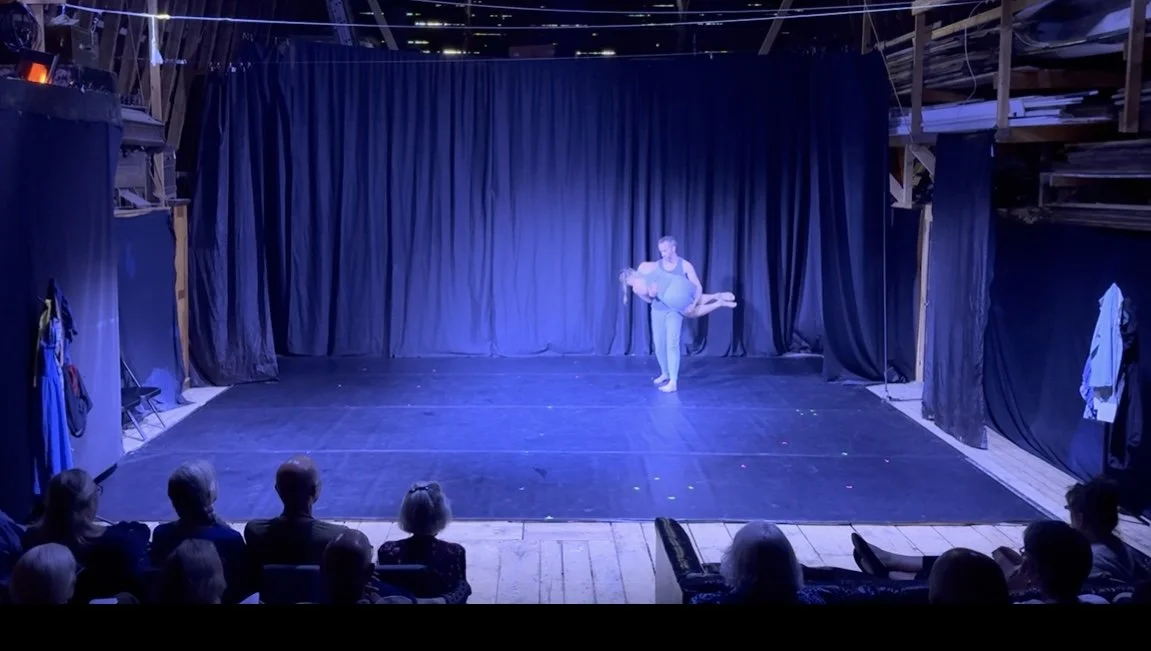
**The cover photo is from a work in progress dance piece exploring grief. **
P.S. I work with individuals and organizations navigating change—and all the emotions that come with it. Grief, growth, uncertainty, excitement… they often show up together. Whether you're processing a transition, leading a team through disruption, or letting go of a version of life or work that no longer fits, you don’t have to do it alone. Through 1:1 coaching, team workshops, and leadership development experiences, I help people move forward with clarity, compassion, and purpose.